AI and Artistry: How Nvidia’s New Tool Impacts Home Decor and Handicrafts in India
India, a land rich in artistic heritage and vibrant craftsmanship, is witnessing a fascinating shift in the world of design. Nvidia’s recent advancements in artificial intelligence are poised to revolutionize how interiors are conceived, furniture is designed, and even traditional handicrafts are approached. While this technological leap sparks discussions about the role of human creativity, it also presents exciting opportunities to enhance and preserve India’s artistic identity. This article delves into the implications of this powerful AI tool for home decor enthusiasts across India, examining its potential impact on aesthetics, authenticity, and the future of handmade treasures.

The Rise of AI in Design: A New Era for Creativity
Artificial intelligence is no longer a futuristic fantasy; it’s rapidly becoming a practical tool transforming various industries, and design is no exception. Nvidia’s latest AI tool, designed to generate images and designs based on textual prompts, is particularly noteworthy. It empowers users to visualize concepts with unprecedented speed and detail. However, this advancement inevitably raises questions about the role of the human artist. Will algorithms replace creativity, or will they serve as powerful partners?
Understanding Nvidia’s AI Tool: How Does it Work?
At its core, Nvidia’s AI tool leverages generative adversarial networks (GANs). GANs consist of two neural networks: a generator that creates new images and a discriminator that evaluates their authenticity. Through constant feedback and refinement, the generator learns to produce increasingly realistic and aesthetically pleasing designs. Users provide text prompts – descriptions of desired styles, objects, or compositions – and the AI generates visual representations based on these inputs. This allows for rapid prototyping and exploration of diverse design possibilities.
What are GANs?
GANs are a type of artificial intelligence that consist of two networks working together. One network (the generator) creates new images, and the other (the discriminator) tries to tell the difference between real and generated images. This constant competition leads to the creation of more realistic and detailed outputs.
Impact on Home Decor Trends in India
India’s home decor scene is a delightful blend of tradition and modernity. From intricately carved wooden furniture to vibrant textiles and elaborate rangoli designs, the country’s aesthetic is deeply rooted in cultural heritage. How will AI influence these trends?
Personalized Design Experiences
AI has the potential to democratize design, making personalized home decor more accessible than ever before. Imagine describing your dream living room – “a space with warm earthy tones, traditional Indian motifs, and a touch of contemporary flair” – and having the AI generate multiple design options tailored to your preferences. This level of customization empowers individuals to create spaces that truly reflect their unique style.
Reviving Traditional Styles with a Modern Twist
AI can play a crucial role in preserving and promoting traditional Indian design elements. By analyzing vast datasets of historical architectural styles, textile patterns, and furniture designs, AI can generate contemporary interpretations that retain the essence of the past. This could lead to a resurgence of interest in forgotten crafts and techniques.
The Future of Furniture Design
Furniture design is undergoing a significant transformation. AI can assist designers in optimizing furniture layouts, exploring innovative materials, and creating ergonomic designs tailored to specific needs. Consider the possibilities of AI generated designs for space-constrained apartments – optimizing furniture placement for maximum functionality and aesthetic appeal. Bhumikart offers a wide range of handcrafted furniture, and AI could help in designing furniture that complements these pieces perfectly.
The Role of AI in Preserving and Promoting Handicrafts
India is renowned for its rich tradition of handicrafts – intricate textiles, delicate pottery, vibrant paintings, and exquisite metalwork. However, many of these crafts are facing challenges due to globalization and changing consumer preferences. AI can be a powerful tool for revitalizing this sector.
Enhancing Product Design and Innovation
AI can assist artisans and designers in exploring new design variations while respecting traditional motifs and techniques. By analyzing patterns and color combinations from historical examples, AI can generate innovative designs that remain authentic to the craft’s heritage. This could lead to new product lines and increased market appeal for Indian handicrafts.
Improving Quality Control and Efficiency
AI-powered image recognition can be used to automate quality control processes, ensuring that handcrafted products meet specific standards. This can help to reduce waste, improve efficiency, and enhance the overall quality of the finished goods. For instance, AI can identify subtle imperfections in textiles or ceramic pieces, allowing for timely corrections.
Empowering Artisans with Design Assistance
AI can provide artisans with design assistance, helping them to visualize their ideas and explore different design options. This can be particularly beneficial for smaller workshops and individual artisans who may lack access to sophisticated design tools. Consider an artisan wanting to create a new pattern for block printing. AI can offer variations and suggest improvements based on established design principles.
At Bhumikart, we believe in empowering artisans and preserving their invaluable skills. We are actively exploring ways to integrate AI-powered solutions to enhance their creative processes and expand their reach. Discover more styling tips at Bhumikart!
Styling Tips: Integrating AI-Generated Designs into Your Home
Whether you are incorporating AI-generated designs or curating traditional and handcrafted pieces, here are some styling tips to create a cohesive and aesthetically pleasing home environment:
- Embrace a Layered Approach: Combine AI-inspired modern pieces with traditional Indian elements like textiles, artwork, and decorative objects.
- Focus on Color Palettes: Draw inspiration from the colors in AI-generated designs and incorporate them into your overall color scheme. Earthy tones, vibrant jewel tones, and pastel shades all work well.
- Texture is Key: Incorporate a variety of textures through fabrics, wood, metal, and ceramics. This adds depth and visual interest to any space.
- Balance Modern and Traditional: Avoid creating a space that feels either too starkly modern or overly traditional. Strive for a harmonious balance between the two.
- Don’t Be Afraid to Experiment: AI offers a playground for experimentation. Try different combinations of colors, patterns, and textures to discover what works best for your space.
Maintenance and Buying Insights
When purchasing handicrafts and furniture, particularly those with intricate details, proper maintenance is essential to preserve their beauty and longevity.
- Textiles: Follow care instructions carefully. Hand-wash delicate textiles or opt for professional cleaning.
- Wood Furniture: Protect wood furniture from direct sunlight and moisture. Regularly dust and polish to maintain its sheen.
- Ceramics and Pottery: Handle ceramic and pottery pieces with care to avoid chipping or breakage.
- Metalwork: Clean metalwork with a soft cloth and avoid using harsh chemicals.
**Authenticity is paramount:** When buying handicrafts, look for pieces that are made by skilled artisans using traditional techniques. Avoid mass-produced items that lack character and soul. Consider purchasing directly from artisans or through reputable marketplaces like Bhumikart, where authenticity is a priority.
The Future of Artistry: Collaboration Between Humans and AI
The rise of AI in design shouldn’t be viewed as a threat to human creativity but rather as an opportunity for collaboration. AI can augment human capabilities, freeing up artists and designers to focus on the more strategic and conceptual aspects of their work. By embracing AI as a tool rather than a replacement, we can unlock new levels of creativity and innovation, preserving and celebrating India’s rich artistic heritage in the process.
Key Takeaways
- Nvidia’s AI tool represents a significant advancement in design technology.
- AI can personalize home decor and revitalize traditional crafts.
- Authenticity and ethical sourcing remain crucial considerations.
- Human creativity and AI can complement each other.
Knowledge Base
- Motifs: Recurring decorative patterns, often with cultural or symbolic significance.
- Rangoli: Colorful patterns made on the floor using rice flour, sand, or colored powders, often created during festivals.
- Jute: A natural fiber commonly used in handicrafts, known for its durability and sustainability.
- Block Printing: A traditional textile printing technique involving carved wooden blocks.
- Gilding: The application of thin layers of gold to surfaces to create a decorative effect.
- Chintz: A type of glazed calico fabric, often with floral or geometric patterns.
- Zardozi: An elaborate embroidery technique using metallic threads, often gold or silver.
- Terracotta: A type of earthenware clay, often used for creating sculptures and decorative objects.
FAQ
- What is AI and how is it being used in design? AI refers to computer systems that can perform tasks that typically require human intelligence. In design, it’s used to generate designs, assist with quality control, and personalize experiences.
- Will AI replace human designers? Not entirely. AI is a tool to augment human creativity, not replace it. The most successful designs will likely result from collaboration between humans and AI.
- How can AI help preserve traditional Indian handicrafts? AI can assist in design innovation, quality control, and marketing, helping to make traditional handicrafts more competitive in the global market.
- Is it possible to generate authentic-looking designs with AI? Yes, AI can learn from vast datasets of historical designs and patterns to create authentic-looking results. However, it’s important to ensure these designs are ethically sourced and respect cultural heritage.
- Where can I find authentic Indian handicrafts? Reputable online marketplaces like Bhumikart offer a curated collection of authentic handicrafts.
- How can I style my home with AI-generated designs? Combine AI-inspired elements with traditional Indian decor, focusing on color palettes, textures, and a balanced aesthetic.
- What are GANs? GANs are a type of artificial intelligence that consist of two networks working together. One network (the generator) creates new images, and the other (the discriminator) tries to tell the difference between real and generated images.
- How does AI affect furniture design? AI can optimize furniture layouts, explore innovative materials, and create ergonomic designs tailored to specific needs.
- What is the role of AI in quality control for handicrafts? AI-powered image recognition can automate quality control processes, ensuring that handcrafted products meet specific standards.
- How do I ensure authenticity when buying handcrafted items? Purchase directly from artisans or through reputable marketplaces that prioritize authenticity and ethical sourcing.
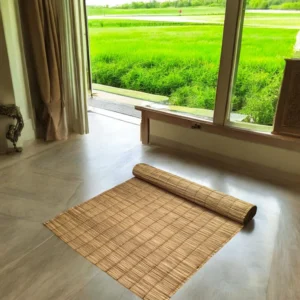 Handmade Natural River Grass Mat | Eco-Friendly Foldable Floor Mat for Home & Yoga – 3x7 ft
 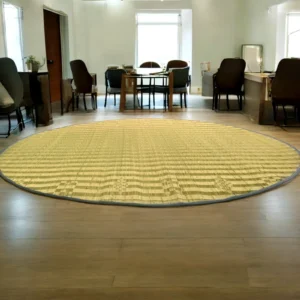 Handmade 4ft Round River Grass Rug – Eco-Friendly Madurkathi Floor Mat for Living Room & Home Decor