Top Healthcare AI Trends in 2026: A Fusion of Innovation and Tradition for Indian Homes
The year 2026 promises a fascinating convergence of technological advancements and the enduring beauty of traditional Indian aesthetics. While Artificial Intelligence (AI) is rapidly transforming various sectors, its potential to impact healthcare – and consequently, our homes and well-being – is particularly noteworthy. This article delves into the leading healthcare AI trends expected to shape 2026, exploring their relevance to enhancing health and creating a more harmonious living environment in India. We will also explore how these trends can complement traditional Indian craftsmanship and design, fostering a holistic approach to health and home.

The Rise of Personalized Health Monitoring with AI
One of the most significant healthcare AI trends in 2026 is the widespread adoption of personalized health monitoring. AI-powered wearable devices and home-based sensors will become increasingly sophisticated, offering real-time insights into an individual’s health. This data, analyzed by AI algorithms, allows for proactive health management and early detection of potential issues.
Smart Wearables & IoT Integration
Wearable technology, such as smartwatches and fitness trackers, will evolve beyond simple step counting. In 2026, these devices will incorporate advanced sensors to track vital signs like heart rate variability, sleep patterns, stress levels, and even blood glucose levels. The Internet of Things (IoT) will further integrate these devices with home environments, creating a seamless ecosystem of health monitoring. Imagine your smart home adjusting lighting and temperature based on your sleep quality, or receiving gentle reminders to take medication based on your health data. This approach aligns beautifully with the Indian emphasis on preventative healthcare.
AI’s predictive analytics capabilities will be crucial. By analyzing historical health data, these systems can identify patterns and predict potential health risks, allowing individuals to take proactive steps.
AI-Powered Home Health Assistants
The concept of a home health assistant, powered by AI, will gain traction. These assistants, potentially integrated into existing smart home systems, can provide personalized health recommendations, reminders, and even virtual care support. They could help manage chronic conditions, offer emotional support, and connect individuals with healthcare professionals when needed. This is particularly relevant for the aging population in India and those living in remote areas with limited access to healthcare.
AI in Diagnostics: Revolutionizing Early Detection
AI is poised to revolutionize diagnostics, enabling earlier and more accurate detection of diseases. Machine learning algorithms can analyze medical images, lab results, and patient data to identify subtle patterns that might be missed by human doctors. This has profound implications for improving patient outcomes and reducing healthcare costs.
Medical Image Analysis
AI’s ability to analyze medical images – X-rays, CT scans, MRIs – is particularly promising. AI algorithms can detect early signs of cancer, heart disease, and other conditions with remarkable accuracy. This early detection significantly improves the chances of successful treatment. Consider the importance for India, where access to specialized radiologists can be a challenge in many regions.
AI-Driven Pathology
AI is also transforming pathology, the study of diseases. AI-powered systems can analyze tissue samples to identify cancerous cells and other abnormalities. This can speed up the diagnostic process and improve the accuracy of diagnoses. The integration of AI in pathology promises faster and more reliable results, a vital step towards improved healthcare in India.
The Role of AI in Mental Healthcare: Addressing a Growing Need
Mental healthcare is gaining increasing attention in India, and AI is offering innovative solutions to address the growing need for mental health support. AI-powered chatbots and virtual therapists can provide accessible and affordable mental health services, particularly for those who may be hesitant to seek traditional therapy due to stigma or cost.
AI-Powered Chatbots for Emotional Support
Chatbots can provide a safe and non-judgmental space for individuals to express their emotions and receive support. These chatbots can offer coping strategies, mindfulness exercises, and even connect individuals with human therapists when needed. This represents a significant step towards destigmatizing mental health and making support more readily available.
AI for Early Detection of Mental Health Conditions
AI algorithms can analyze social media activity, speech patterns, and other data to identify individuals who may be at risk of developing mental health conditions. This allows for early intervention and prevents more serious problems from developing. This application of AI has the potential to significantly improve mental well-being in India.
Seamless Integration with Traditional Indian Healthcare Practices
At Bhumikart, we understand the importance of preserving India’s rich cultural heritage. The integration of AI in healthcare doesn’t necessitate the abandonment of traditional healing practices like Ayurveda and Yoga. In fact, AI can be used to enhance and complement these practices.
AI-Assisted Ayurvedic Diagnosis
AI algorithms can analyze patient symptoms and pulse readings to provide insights that can assist Ayurvedic practitioners in making more accurate diagnoses. This can help bridge the gap between traditional and modern medicine, leading to a more holistic approach to healthcare. Imagine AI identifying potential imbalances in the doshas (Vata, Pitta, Kapha) based on traditional diagnostic methods.
Personalized Wellness Plans Combining AI and Ayurveda
AI can be used to create personalized wellness plans that combine Ayurvedic principles with modern lifestyle recommendations. These plans can incorporate dietary suggestions, exercise routines, and mindfulness practices tailored to individual needs. This approach promotes a harmonious balance between mind, body, and spirit – a cornerstone of traditional Indian healthcare.
Styling Your Home for Well-being in 2026: A Blend of AI-Inspired Design and Indian Traditions
The trends in healthcare AI can also inform how we design and decorate our homes in 2026, creating spaces that promote well-being. Think biophilic design principles amplified by technology. Incorporating natural light, plants, and calming colors can contribute to a sense of peace and tranquility. AI can even play a role in optimizing lighting and temperature for maximum comfort.
Biophilic Design with Smart Technology
Biophilic design focuses on connecting with nature through design elements. In 2026, smart technology can complement this by automatically adjusting lighting to mimic natural daylight patterns and controlling temperature to create a comfortable and healthy environment. Consider smart windows that regulate sunlight or automated plant watering systems.
Mindful Color Palettes and Textures
Color psychology plays a significant role in our emotional well-being. Incorporate calming colors like blues, greens, and earth tones into your home decor. Use natural textures like cotton, linen, and wood to create a sense of warmth and comfort. Bhumikart offers a range of handcrafted textiles and furniture that embody these principles.
Maintenance and Buying Insights
When investing in AI-powered health devices or smart home technology, prioritize data privacy and security. Choose reputable brands with robust security measures. Regularly update software to ensure optimal performance and security. Traditional Indian handicrafts, while durable, require gentle care. Follow the manufacturer’s instructions for cleaning and maintenance. For furniture, consider using protective coatings and avoiding harsh chemicals. Discover more styling tips at Bhumikart.
| Feature | AI-Powered Health Devices | Traditional Indian Handicrafts |
|---|---|---|
| Data Privacy | Critical – Choose secure brands | Generally Low – Focus on natural materials |
| Maintenance | Regular software updates | Gentle cleaning, avoid harsh chemicals |
| Durability | Varies by device | Can be very durable with proper care |
| Cost | Ranges widely | Ranges widely, depending on materials and craftsmanship |
Conclusion: A Holistic Approach to Well-being
The future of healthcare in 2026 is inextricably linked with AI, offering unprecedented opportunities for personalized health monitoring, early detection, and mental well-being support. By embracing these advancements while honoring the rich traditions of Indian craftsmanship and design, we can create homes that are not only aesthetically pleasing but also actively contribute to our health and happiness. The convergence of technology and tradition promises a future where well-being is both technologically enhanced and culturally enriched.
Frequently Asked Questions (FAQ)
- What are the most promising AI trends in healthcare for India in 2026?
- How can AI be integrated with traditional Indian medicine?
- Is it safe to use AI-powered health devices?
- How can I create a home environment that promotes well-being in 2026?
- What are some popular AI-powered health devices available in India?
- What is the role of AI in mental healthcare?
- How can I find authentic Indian handicrafts online?
- What is biophilic design?
- How does AI improve medical image analysis?
- What are the key considerations when buying smart home devices?
Personalized health monitoring, AI-driven diagnostics, and AI-powered mental healthcare are the most promising trends.
AI can assist Ayurvedic practitioners in diagnosis and create personalized wellness plans based on both traditional principles and modern lifestyle recommendations.
Yes, but it’s crucial to choose reputable brands with robust data privacy and security measures.
Incorporate biophilic design principles, use calming colors and textures, and prioritize natural light and ventilation.
Smartwatches, fitness trackers, and home health sensors are becoming increasingly popular.
AI-powered chatbots and virtual therapists can provide accessible and affordable mental health support.
Bhumikart offers a curated collection of authentic Indian handicrafts and handmade furniture, ensuring quality and ethical sourcing.
Biophilic design is an approach to architecture and interior design that seeks to connect building occupants more closely to nature.
AI algorithms can detect subtle patterns in images that might be missed by human eyes, leading to earlier and more accurate diagnoses.
Consider data privacy, security features, compatibility with existing systems, and the device’s overall functionality.
Knowledge Base
- Doshas: In Ayurveda, Doshas are three fundamental energies that govern physical and mental characteristics. Understanding your dosha helps tailor diet and lifestyle for optimal health.
- Biophilic Design: An architectural approach aiming to connect building occupants with the natural environment.
- IoT (Internet of Things): A network of interconnected devices that communicate and exchange data.
- Machine Learning: A type of AI that allows computers to learn from data without explicit programming.
- Predictive Analytics: Using data to forecast future outcomes and trends.
- Vata, Pitta, Kapha: The three doshas in Ayurveda, representing different combinations of energy and elements.
- Handcraft Techniques: Collective terms referring to skills like weaving, pottery, embroidery, and carving, often passed down through generations.
- Sustainable Design: Design focusing on minimizing environmental impact through material selection and energy efficiency.
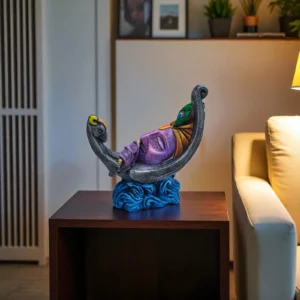 Handcrafted Clay Krishna on Moon – Colorful Flute Idol